Where Did the Inserts Go in Your Automotive Machine Shop
The insert shelf is nearly empty, another purchase request arrives, and nobody can explain which jobs used the last delivery. This is a familiar material-control problem to investigate in an automotive machine shop. Purchasing records show what entered the factory; they do not automatically show who collected it, where it went or whether it was used.
Separate genuine consumption from unexplained movement
A rise in cutting tool purchases does not prove waste or misuse. Production volume may have increased. A new component may require a different tool. Material hardness, cutting parameters or premature breakage may have changed consumption. Meanwhile, tools issued for a future job may still be waiting in a drawer.
Record issues, approved returns, damaged stock and stock adjustments separately. Treat unusual withdrawal patterns as a reason to investigate the process, not as evidence against an employee. A tool issue record identifies a transaction; it does not measure cutting time, remaining tool life or the number of parts produced.
Make the unit of issue unambiguous
An insert box and an individual insert are different inventory units. If a cabinet releases one box containing ten inserts, recording one insert would distort both stock and costs. Decide whether each material is issued by piece, pack or another unit, and map the purchasing, storage and issuing units consistently.
Single-item dispensing also needs a physical definition. One package per vend is not the same as one loose insert per vend. Test the actual box dimensions, weight and surface finish with the proposed dispensing mechanism. Small, valuable items may need a different compartment arrangement from drill packs, gloves or bulky tooling accessories.
Collect enough information to explain the withdrawal
Useful issue records typically include the employee identifier, material number, quantity, time and cabinet location. Add the cost center, machining cell or job reference when that information supports a real management decision. Keep the operator workflow short enough to use correctly during a busy shift.
For example, if two cells withdraw very different quantities of the same insert, first check whether their component mix, production volume and tool specifications are comparable. The record helps identify where to ask questions. It does not by itself establish that one cell is less efficient.
Use different workflows for consumables and reusable tools
Carbide inserts and worn drill bits are not managed in the same way as reusable gauges, fixtures or tool holders. Consumables need clear issue quantities and replenishment rules. Reusable items need borrower identity, return status and a way to separate usable stock from items awaiting inspection, repair or calibration.
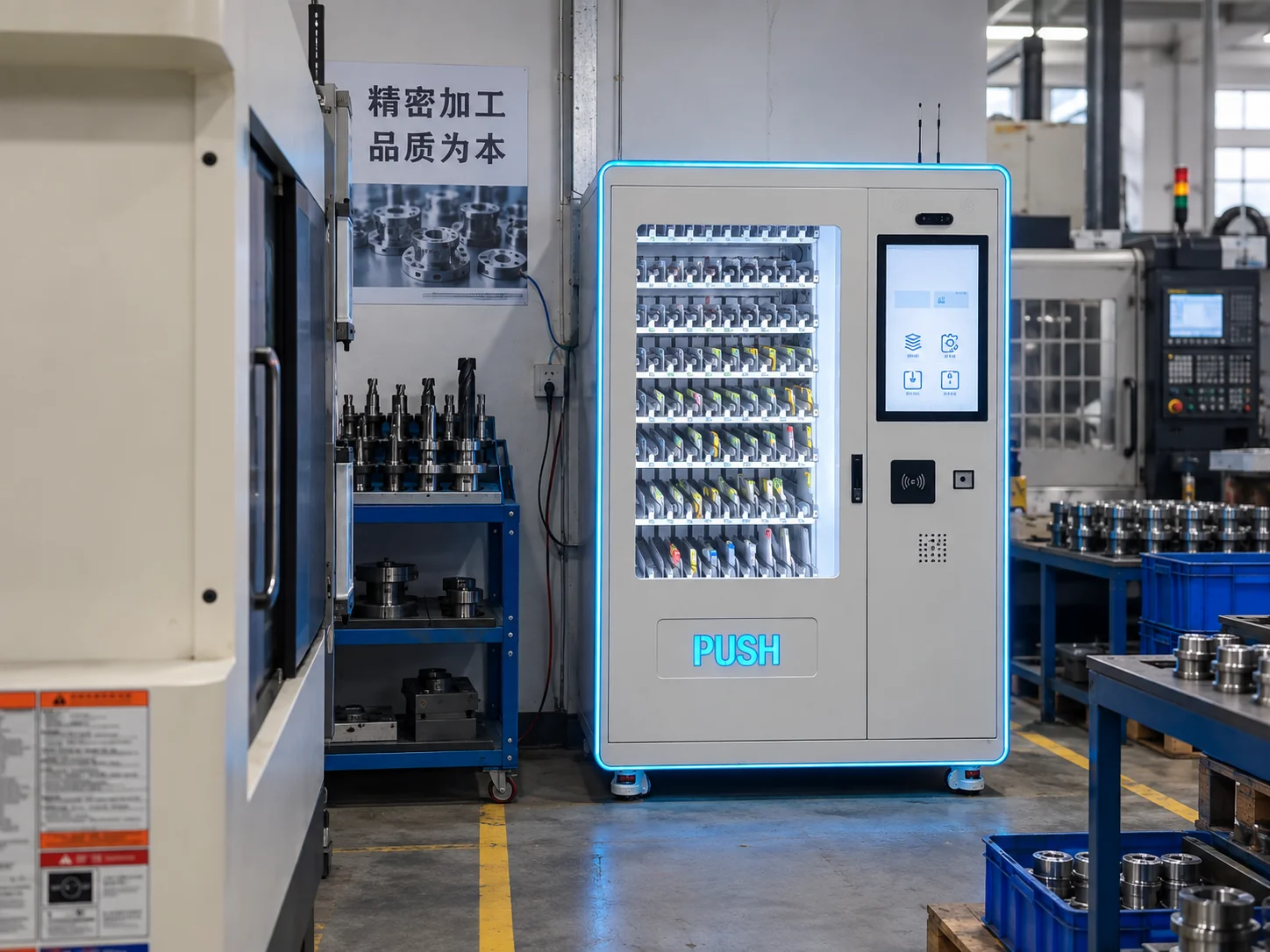
Compare the available formats in the Qtech cabinet product range against your actual materials. A mixed workshop may combine dispensing channels, drawers and lockers rather than force every item into one storage method. The metal fabrication supplies solution also addresses abrasives, fasteners and PPE used around machining and maintenance operations.
Measure cost in a way production teams can use
Start with a stock reconciliation: opening quantity plus replenishments and approved returns, minus issues and documented adjustments, should explain closing quantity. Compare that expected balance with a physical count. Repeated discrepancies can reveal unit errors, unrecorded refills, failed dispensing or incorrect material assignment.
For cost analysis, compare recorded net tool issues with production output over a defined period, using consistent material costs and job allocation. Call this an issued-tool cost indicator if you have not reconciled unused line-side stock and actual consumption. To calculate tooling cost per good part accurately, the production count, scrap treatment and consumption basis must also agree.
Useful measures include stock discrepancy rate, emergency replenishments, time spent collecting tools and the value of slow-moving stock. A lower withdrawal count is not automatically an improvement if workers cannot obtain the tools they need.
Start with the items causing repeated questions
Select the insert grades and cutters that generate the most stock queries, urgent orders or unexplained adjustments. Clean their master data, test dispensing and assign ownership of replenishment. Review the results with production and purchasing together before expanding the material list.
To discuss a suitable arrangement, contact Qtech with your material list and package sizes. Include the distinction between consumables and returnable tools, the unit of issue and the reports your team needs. That information makes a cabinet evaluation more useful than a capacity comparison alone.