Why Automotive Automation Needs Better Cutting Tool Availability
A CNC cell can load parts automatically and still wait for a replacement insert. If the correct tool is missing, stored in another department or unavailable during a shift change, the production schedule depends on someone finding it. For automotive component manufacturers, cutting tool availability deserves attention alongside robot loading, machining programs and machine uptime.
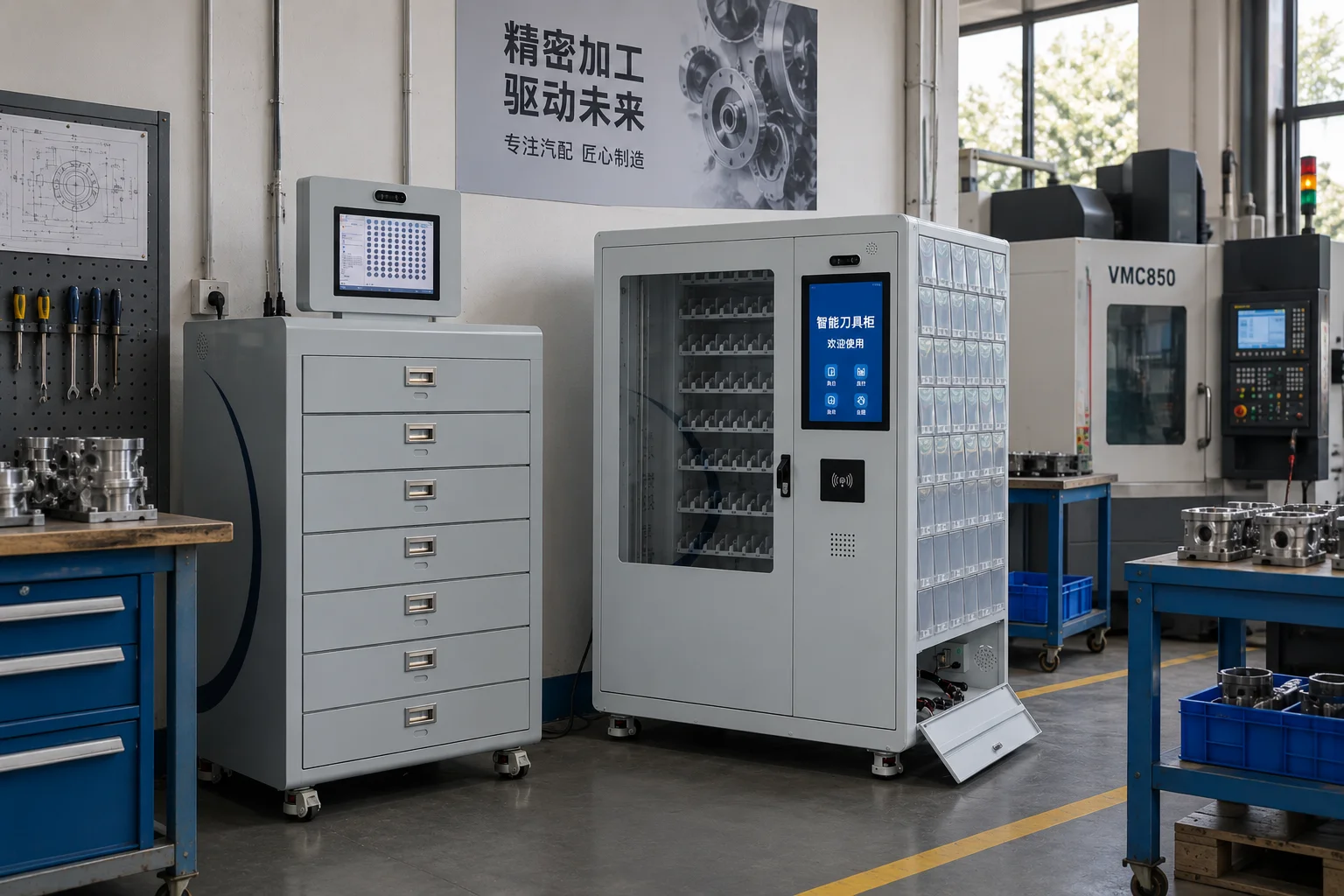
Automation makes the material supply process more visible
Automotive production continues to attract substantial automation investment, although growth differs by market. In its June 2026 preliminary release, the International Federation of Robotics reported that automotive remained the largest adopter of industrial robots in the United States, with 13,500 installations in 2025, approximately 1% below the previous year. The practical question for an existing automated plant is how reliably its supporting processes keep production supplied.
In automotive machining, those supporting processes include replenishing carbide inserts, drill bits, end mills, taps and other approved consumables. A robot does not remove the need to identify the right item, maintain usable stock and record where materials go. When a tool shortage stops a scheduled operation, the problem reaches beyond the price of the missing tool.
Why an item can be in stock but unavailable
A purchasing system may show stock across the factory while the required grade or diameter is missing beside a particular machining cell. An opened insert box may be in a personal drawer. A similar-looking cutter may occupy the expected location. The stock quantity can therefore look sufficient without answering the operator's immediate question: is the approved item available here now?
Begin with a consistent material number and a description that distinguishes grade, geometry, coating, diameter and package quantity where relevant. Approved substitutes should be defined by the process owner. An inventory cabinet can help control access to selected items, but it cannot decide that two cutting tools are technically interchangeable.
Put controlled stock close to the work
A CNC tool vending machine can place frequently needed items near the machining area while recording collection. The practical workflow is to identify the operator, show permitted materials, issue the selected item and record the transaction. The configuration should match the plant's access rules and the packaging of each tool.
Employee badge identification and RFID tool tracking serve different purposes. A badge identifies the person collecting a tool; tracking an individual reusable tool requires a suitable identification method for that asset. Likewise, a cabinet withdrawal records an issue, not proof that the tool has already been consumed in production.
Qtech's smart tool cabinets and industrial vending systems provide a starting point for this type of controlled material access. For machining areas that also use fasteners, abrasives and PPE, the metal fabrication material management solution covers related workshop supply needs.
Replenishment needs an owner and a response time
A low-stock notification is useful only when someone acts on it. Set the replenishment threshold using expected demand during the refill lead time, plus a buffer appropriate to the item's production risk. A cutter used for a scheduled batch may need a different rule from a low-cost item consumed steadily across all shifts.
Assign responsibility for reviewing alerts, preparing replenishment and confirming the quantity loaded. Treat material moved from the central store to the cabinet as a stock transfer. Consumption should be recorded when the plant's defined issuing event occurs, so the same movement is not counted twice.
Test one machining area before expanding
Start with a group of production-critical inserts and cutters used in one machining area. Establish a baseline for tool-search time, tool-related interruptions, emergency purchases and cabinet stock accuracy. Test the real packaging, employee cards and refill process during normal production and shift changes.
Also test what happens when an item fails to dispense or the network is unavailable. A defined exception process matters as much as a successful demonstration. Keep tool-condition checks, approved cutting parameters and machining quality controls in place; inventory access does not replace them.
Plan around the production requirement
The purpose of automotive tool management is to make approved materials available when the operation needs them, with enough transaction detail to maintain stock and investigate shortages. The strongest starting point is a clear material list and a measured production problem.
Send Qtech your cutting tool list, package dimensions, shift pattern and replenishment process through our cabinet project enquiry page. These details help us evaluate an appropriate cabinet layout and the workflow needed for your automotive machining area.